1. Gung Ho starring Michael Keaton
2. Mr. Baseball starring Tom Selleck and Ken Takakura
3. Rising Sun starring Sean Connery and Wesley Snipes
4. Karate Kid parts I and II staring Ralph Machio and Pat Morita
5. Black Rain starring Michael Douglas and Ken Takakura
6. The Yakuza starring Robert Mitchum and Ken Takakura
7. The Last Samurai starring Tom Cruise and Ken Watanabe
8. Rhapsody in August starring Richard Gere
Do you know of any movies about Japan that were produced in Hollywood? If so, please let me know!
The Divine Wind Vault http://divinewindvault.blogspot.com (C)2006-11
Saturday, July 30, 2011


Saturday, April 16, 2011
My beloved Japan: Kawaisou
In the weeks that have followed what the U.S. Geological Survey said was a magnitude 8.9, the biggest earthquake to hit Japan since officials began keeping records in the late 1800s, and one of the biggest ever recorded in the world, I've been on the other side of the world in my native homeland busy accomplish goals and chasing my dreams. Being forever connected with Japan by marriage, my past experiences with the US military and international education and by my love of the Japanese culture and it's people, I am quite disappointed in myself for not taking a more active role locally to help raise money for the Japanese people in their time of need.
One common thought that has crossed my mind since the big earthquake was the Japanese word, Kawaisou. This word means poor, pitiful, sad, sorrowful, miserable. I first learned this word from my mother-in-law. She was talking to my wife back in 1999 and feeling sorry for me since at that time was a complete novice when it came to the Japanese language and customs. I got turned around at the Shinjuku train station and didn't have a cell phone and some how got back to her home about three hours after dinner. Of course, everyone was worried about me.
With this being said, I will help by using this tragedy as a teachable moment and highlight the silver lining. That is, not once has there been a report regarding looting which is a testiment to the Japanese people and its culture. Furthermore, there has been strong support domestically and internationally as well as preserverence from the Japanese people once the dust settled and smoke cleared.
"Why don't Japanese loot? Because it's not in their culture. How is that culture defined? An absence of looting."
First, in the days and weeks that followed, Japanese people formed lines outside supermarkets. Supermarkets would close in the early hours of the afternoon due to running out of stock then reopen the next morning with a line of people patiently waiting. Unlike those undisciplined thieves in post-Katrina New Orleans and post-earthquake Haiti, the Japanese will still wait in line for groceries. It is important to understand that the Japanese culture values the group over the individual.
A better explanation to why the Japanese don't loot may be structural factors such as a robust system of laws that reinforce honesty, a strong police presence, and, ironically, active crime organizations. More on the yakuza's roll in the reason why Japanese don't loot.
Next, "Operation Tomodachi" is a United States Armed Forces assistance operation to support Japan in disaster relief following the 2011 Tohoku earthquake and tsunami. As the US threatens to temporarily close its own government due to a lack of funds, tough decisions must be made by the US government regarding being First World countries such as Japan's primary military support and the associated costs that come with having a forward deployed military on the other side of the world. As of 29 March 2011, the operation, including relief supplies provided to victims of the disaster, was expected to cost a total of $80 million.
In the days that follow the Earthquake and Tsunami, there are signs of hope in the affected area of Tohoku. One bit of good news is that the construction of regular relocation facilities has begun and 30,000 houses will be completed in two months. There are also plans to build 2,800 more. Furthermore, other prefectures such as Tokyo, Saitama and Hyogo have announced that they will take in refugees from the area. For example, Hyogo Prefecture is willing to take in 10,000 people and so is Osaka. As Hyogo( its capital is Kobe) was hit by the Great Earthquake in 1995 and received a lot of support from other prefectures then, it is very keen to help the people in Tohoku.
In closing, these days, American Rock legend, Jon Bon Jovi asks, "What do you got (if you ain't got love?)"
Japan, never give up hope. Many people around the world love your culture and people and will do what we can to be there for you in your time of need.
DJS
Dublin, Ohio, USA
April 16th, 2011
Divine Wind Vault http://divinewindvault.blogspot.com (C)2006-11
One common thought that has crossed my mind since the big earthquake was the Japanese word, Kawaisou. This word means poor, pitiful, sad, sorrowful, miserable. I first learned this word from my mother-in-law. She was talking to my wife back in 1999 and feeling sorry for me since at that time was a complete novice when it came to the Japanese language and customs. I got turned around at the Shinjuku train station and didn't have a cell phone and some how got back to her home about three hours after dinner. Of course, everyone was worried about me.
With this being said, I will help by using this tragedy as a teachable moment and highlight the silver lining. That is, not once has there been a report regarding looting which is a testiment to the Japanese people and its culture. Furthermore, there has been strong support domestically and internationally as well as preserverence from the Japanese people once the dust settled and smoke cleared.
"Why don't Japanese loot? Because it's not in their culture. How is that culture defined? An absence of looting."
First, in the days and weeks that followed, Japanese people formed lines outside supermarkets. Supermarkets would close in the early hours of the afternoon due to running out of stock then reopen the next morning with a line of people patiently waiting. Unlike those undisciplined thieves in post-Katrina New Orleans and post-earthquake Haiti, the Japanese will still wait in line for groceries. It is important to understand that the Japanese culture values the group over the individual.
A better explanation to why the Japanese don't loot may be structural factors such as a robust system of laws that reinforce honesty, a strong police presence, and, ironically, active crime organizations. More on the yakuza's roll in the reason why Japanese don't loot.
Next, "Operation Tomodachi" is a United States Armed Forces assistance operation to support Japan in disaster relief following the 2011 Tohoku earthquake and tsunami. As the US threatens to temporarily close its own government due to a lack of funds, tough decisions must be made by the US government regarding being First World countries such as Japan's primary military support and the associated costs that come with having a forward deployed military on the other side of the world. As of 29 March 2011, the operation, including relief supplies provided to victims of the disaster, was expected to cost a total of $80 million.
In the days that follow the Earthquake and Tsunami, there are signs of hope in the affected area of Tohoku. One bit of good news is that the construction of regular relocation facilities has begun and 30,000 houses will be completed in two months. There are also plans to build 2,800 more. Furthermore, other prefectures such as Tokyo, Saitama and Hyogo have announced that they will take in refugees from the area. For example, Hyogo Prefecture is willing to take in 10,000 people and so is Osaka. As Hyogo( its capital is Kobe) was hit by the Great Earthquake in 1995 and received a lot of support from other prefectures then, it is very keen to help the people in Tohoku.
In closing, these days, American Rock legend, Jon Bon Jovi asks, "What do you got (if you ain't got love?)"
Japan, never give up hope. Many people around the world love your culture and people and will do what we can to be there for you in your time of need.
DJS
Dublin, Ohio, USA
April 16th, 2011
Divine Wind Vault http://divinewindvault.blogspot.com (C)2006-11
Saturday, March 12, 2011
Remembering Sendai- November 2006
One day in November 2006, my in-laws and I traveled to Sendai. Now, as this region suffers from the largest earthquake in modern Japanese history, tsunamis, and aftershocks, I remember my time in this place.
Monday, November 06, 2006
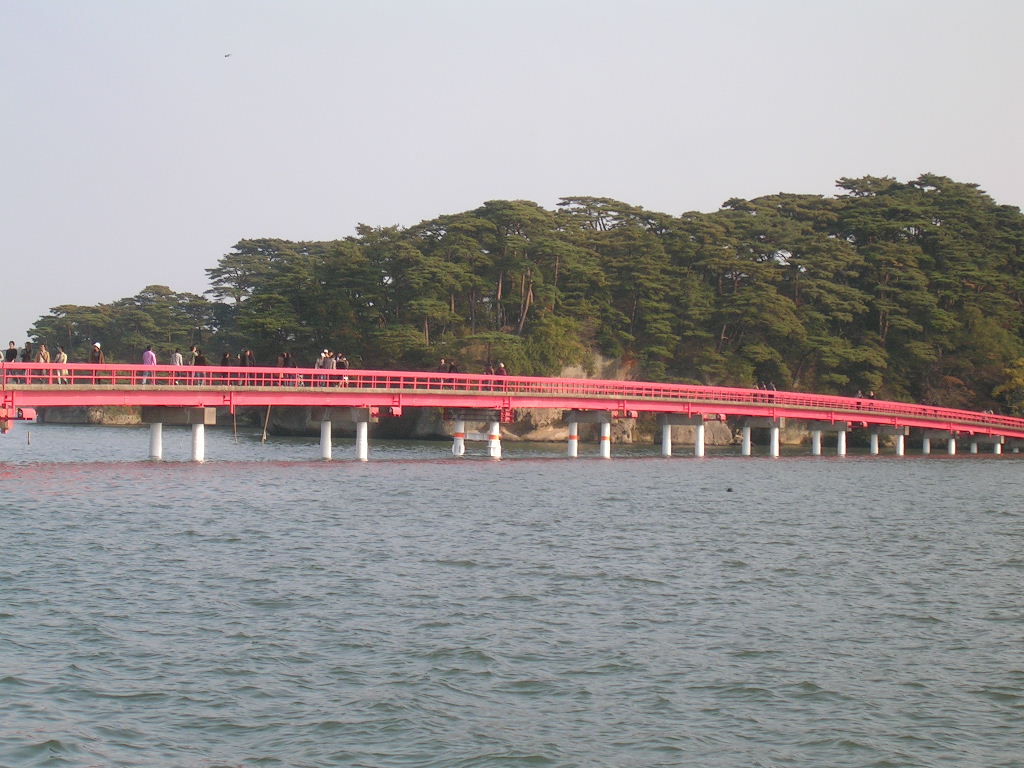
This past weekend, we did a day trip to Sendai and before I forget the things that I learned from this trip, here goes:
1- Why they eat Cow tongue and cow's tail?
After WWII, the Tohoku region was the last region to be rebuilt from the war-torn bombings that Japan received and for whatever reason, was a low priority. Of course, Nagasaki and Hiroshima were tops on the list, as for Tokyo and other cities that took on all of the bombing.
With MacArthur at the helm, and Roosevelt`s "Ronins" by his side, Japan made the transition from a defeated, war-torn nation, to the economic power that it is today. But back in those early days, the poor people of Tohoku had to survive on anything that they could get their hands on. As the occupants of Japan were not keen on eating cow tongue and the cow`s tail, this is what the local people survived on.
Aside from the unusual parts of the cow that are popular in Sendai, Kamaboko is also popular there. I remember back in my Navy days, returning to the base in Yokosuka after a long night of singing and dancing up in Roppongi. I would have the munchies and outside of the main gate was a 7-eleven "konbeni". So, I would stop by and grab a few sticks of kamaboko and scarf it down as I made the mile trek back to my ship. The sight of me walking down the road all hung over and eating a stick of kamaboko with backpack full of empty bottles of cheap wine bought the previous evening must be amusing.
Another interesting dish eaten in Sendai was whale.
2- Tohoku-ben
Tohoku-ben is the regional dialect spoken amongst the locals of this region. Japanese is difficult enough not to throw in the regional dialects. Anyway, the shortest conversation in Japan is when a mother in Sendai tells her child to eat something. It goes like this:
Mother- Ke.
Child- Ku.
In Tokyo, it would go like this:
Mother- Tabenasai.
Child- Hai, tabete imasu.
English:
Mother- Eat (command form)
Child- Yes, I'm eating.
3- One interesting thing about this day trip was where we ate lunch. Around lunch time, we toured the local fish market. Every Japanese town near the sea has one, and for some reason, foreigners love going there. Tsukiji`s fish market in Tokyo is always swarming with foreigners the times that I`ve been there. Anyway, in Sendai, we bought some of the local seafood and ate it with the rice and miso soup that was provided by the staff. We ate a few feet from a shop owners refridgerated display. Customers would walk by and see a group of people eating some of the local goods. Not a bad way to get people to buy your stuff!


Monday, November 06, 2006
This past weekend, we did a day trip to Sendai and before I forget the things that I learned from this trip, here goes:
1- Why they eat Cow tongue and cow's tail?
After WWII, the Tohoku region was the last region to be rebuilt from the war-torn bombings that Japan received and for whatever reason, was a low priority. Of course, Nagasaki and Hiroshima were tops on the list, as for Tokyo and other cities that took on all of the bombing.
With MacArthur at the helm, and Roosevelt`s "Ronins" by his side, Japan made the transition from a defeated, war-torn nation, to the economic power that it is today. But back in those early days, the poor people of Tohoku had to survive on anything that they could get their hands on. As the occupants of Japan were not keen on eating cow tongue and the cow`s tail, this is what the local people survived on.
Aside from the unusual parts of the cow that are popular in Sendai, Kamaboko is also popular there. I remember back in my Navy days, returning to the base in Yokosuka after a long night of singing and dancing up in Roppongi. I would have the munchies and outside of the main gate was a 7-eleven "konbeni". So, I would stop by and grab a few sticks of kamaboko and scarf it down as I made the mile trek back to my ship. The sight of me walking down the road all hung over and eating a stick of kamaboko with backpack full of empty bottles of cheap wine bought the previous evening must be amusing.
Another interesting dish eaten in Sendai was whale.
2- Tohoku-ben
Tohoku-ben is the regional dialect spoken amongst the locals of this region. Japanese is difficult enough not to throw in the regional dialects. Anyway, the shortest conversation in Japan is when a mother in Sendai tells her child to eat something. It goes like this:
Mother- Ke.
Child- Ku.
In Tokyo, it would go like this:
Mother- Tabenasai.
Child- Hai, tabete imasu.
English:
Mother- Eat (command form)
Child- Yes, I'm eating.
3- One interesting thing about this day trip was where we ate lunch. Around lunch time, we toured the local fish market. Every Japanese town near the sea has one, and for some reason, foreigners love going there. Tsukiji`s fish market in Tokyo is always swarming with foreigners the times that I`ve been there. Anyway, in Sendai, we bought some of the local seafood and ate it with the rice and miso soup that was provided by the staff. We ate a few feet from a shop owners refridgerated display. Customers would walk by and see a group of people eating some of the local goods. Not a bad way to get people to buy your stuff!




The Divine Wind Vault http://divinewindvault.blogspot.com (C)2006-11
Saturday, March 5, 2011
Coca-Cola Chicken Wings Recipe / 可乐鸡翅 Cooking Chinese Food
A unique recipe presented to me from one of my students:
The Divine Wind Vault http://divinewindvault.blogspot.com (C)2006-10
The Divine Wind Vault http://divinewindvault.blogspot.com (C)2006-10
Friday, February 11, 2011
The American Heartland and Tokyo just got a little closer
On Delta Airlines, fly from Detroit to Tokyo-Haneda (service begins February 19, 2011)
Click here for more details and specials for traveling to Japan.
The Divine Wind Vault http://divinewindvault.blogspot.com (C)2006-11
Click here for more details and specials for traveling to Japan.
The Divine Wind Vault http://divinewindvault.blogspot.com (C)2006-11
Sunday, January 23, 2011
Yotsuya Revisited
 Written in 2007:
 Hello everyone and sorry about the delay. The way that this blog works is that I will do something and then write about it then find some pictures and then post it on my blogspot. Now, my blogging host offers how to add web links to your blog entry so I plan on doing that for as many entries as I can while I have the time.
Anyway, I've been doing alot of interesting things the past two weeks (March 19th to April 6th). The day after tomorrow is the beginning of my last term as a JET teacher in Japan. The term will end on July 20th and my wife and I plan on making our way back to the US to settle down and start the next chapter of our lives shortly thereafter.
On March 19th, I met with my wife near her office in Tokyo for lunch. We dined at a Middle Eastern restaurant known as "Pita" managed by one person who acts as a cashier, cook, waiter and busboy. With Japan as expensive as it is, that is about the only way to go to keep afloat. The food was excellent and the big portions were appreciated. Afterwards, I did some reading and research at the Foreign Correspondents' Club of Japan near the famous Yurakucho Station in the Ginza district of Tokyo. As long as I didn't make any trouble I could sit there and read the wealth of English publications that otherwise is for members only. After reading my fill, I returned back to Saitama to get ready for my main school's "Enkai" (dinner party/banquet). Prior to all of this I was telling my mother and she commented, "I like banquets since the food is usually good and it's a free meal!" I corrected her on the "Free" part of that since if you go, you usually pay it isn't anything to sneeze at. On this night's event, I ended up paying 7000 yen to dine and drink at a Italian restaurant and then spent another 1500 yen at the "Ni Ji Kai" (literally means the second time or second party) which would have been more but the quote from the first setting was a bit less that what we paid. From my experiences that usually is the case and the ni ji kai is often already paid for. So, if I don't go to these events, it is because I can't justify paying that kind of money or know that the following day is a day that I need to be fully alert not hungover ("Futsukayoi"- literally meaning the second day still drunk). I try to go at least once even if it is against my will since in most cases I am the lonely representative of foreigners, native English teachers, etc. and hope that my presence after I am gone is still felt by those I encounter in a postive and meaningful way. The banquets are alot of fun and interesting since I'm the only American and have a crowd of people who have been interesting in me for a long time but due to the office culture at school and just being plain busy, my colleagues have yet to get to know me. It helps if a team teaching person (Japanese Teacher of English) is nearby to keep me away from my electronic dictionary so that I can communicate better.)
From March 28-30, I was a volunteer teacher for a local high school that is a current participant in the new "Super English" program. To learn more about this program, please google the phrase. Anyway, this school has two teachers such as myself that are permananately assigned to the school and work with about six JTEs and basically team teach together the 1st year students (16-year-olds and the equivalant to 10th graders in the US). On this trip, we traveled from Urawa to Fukushima's British Hills resort. Fukushima is part of Japan's northern region, Tohoku (the most northern part of Japan's main island, Honshu). I went to this region for the first time in November 2006 when we traveled to Sendai (search this blog to read about it).
Upon my return to Saitama, my wife and I spent time with my father-in-law and his family on a day trip to Hakone of Kanagawa-ken. We rented a car and drove from central Tokyo (my father-in-law has an apartment there). Hakone is best visited by traveling by the famous "Romance Car" from Shinjuku Station on the Odakyu Line. The way provided us a chance to experience Tokyo's traffic (not so bad since it was on a weekend) but we also got to see Fujiya Hotel which was the place that John Lennon and other distiguished people stayed at while traveling in Japan. I have been told that it is the first western-hotel in Japan. For lunch we had soba (buckwheat noodles) and tempura (deep-fried seafood and vegetables) which are famous in this area. My wife and I noticed that famous tourist places in Japan over do it with soba and tempura restaurants since these Japanese dishes are friendly with pure gaijins such as my parents and the like. We had an interesting experience at a Japanese restuarant with my family back in 2005 at Kamakura.
After lunch we rode the ferry across the lake and then drove up to a viewing area for Mt. Fuji. After driving up to the place, we had to settle for the black eggs since it was too cloudy to see Mt. Fuji.
In general, Hakone is famous for Kamaboko (fish cakes packed like a hotdog is packed back home), kuro tamago (black boiled eggs that get their color due to being boiled in geysers in the ground), onsens (hot springs that the Japanese use for bathing) the Romance train line, Lake Ashinoko and viewing Mt. Fuji from Owakudani (the place that serves the black boiled eggs).
April 2nd was our 2-year wedding anniversary and we celebrated by having lunch near her office. Since it was a work day, that was all we could do.
Other than going to the Saitama Modern Arts museum near Kita Urawa Station, having dinner with my wife and friends near Ueno Station. One very nice thing was having dinner with my teacher friend and her family. Afterwards we had a Ni Ji Kai of our own by singing Kareoke. I still need to get better at singing some Japanese songs.
Today's picture was taken on March 31st at Tokyo's Yotsuya Station in Central Tokyo. Please note the cherry blossom's in full bloom.
The Divine Wind Vault http://divinewindvault.blogspot.com (C)2006-10
Saturday, January 22, 2011
Back from Japan
Back from Japan
The Divine Wind Vault http://divinewindvault.blogspot.com (C)2006-10
The Divine Wind Vault http://divinewindvault.blogspot.com (C)2006-10
Subscribe to:
Posts (Atom)